5 Kitchen Upgrades That Can Completely Transform an Outdated Home
If your kitchen feels like it's stuck in the past, you're not alone. Many homeowners find that the room they use the most is also the one that affects the vibe of the whole house. The good news? You don't have to rip everything out to make a big change. Smart updates can freshen up the space, make it work better for you, and give your entire home a modern feel. For those thinking about kitchen remodeling, the right changes can create a wow factor without blowing your budget.
In this guide, we'll talk about which kitchen features can make your home feel old, which upgrades have the biggest impact, and how to pick improvements that really count. We'll also share tips on planning, common pitfalls, and some expert advice to help you make smart remodeling choices. Whether you're looking to tweak a few things or go for a bigger makeover like whole-home remodeling, this guide can help.
Did you know that better appliances and more efficient systems can cut energy use in the long run while making your home more comfortable? That's according to the U.S. Department of Energy. You can learn more about home efficiency standards at the U.S. Department of Energy Energy Saver resource. Simply put, an updated kitchen can make your home feel fresher, function better, and support your household for years to come.
Why an Outdated Kitchen Changes the Feel of the Whole Home
The kitchen is usually the first room people notice
The kitchen often sets the tone for the whole house. Guests, potential buyers, and family members naturally spend time there, so outdated finishes or awkward layouts can impact how the rest of the property is seen. Even if other rooms are updated, an older kitchen can make the home feel like it's lagging. That's why many people start their home improvement projects with the kitchen—it's the space everyone sees and uses the most.
Outdated kitchens often share a few telltale signs: dark cabinets, mismatched finishes, poor lighting, worn countertops, and layouts that don't support how people actually cook and gather. These issues don't just look dated—they make the room feel harder to use. When a kitchen is inconvenient, the rest of the house often feels less comfortable too. That's why many remodeling plans start with improving storage, surfaces, and flow.
Function matters as much as style.
A kitchen can look okay on the surface but still feel outdated if the workflow isn't right. A cramped prep area, not enough electrical outlets, and poorly placed appliances can lead to small daily frustrations that build up over time. Modern kitchens are designed for better movement, cleaner sightlines, and easier access to storage. When these elements are missing, the home can feel older even if the finishes are only mildly dated.
For a wider interior refresh, some homeowners pair kitchen updates with interior renovations so the updated look flows into nearby living spaces. This is particularly effective when cabinets, paint colors, flooring, and trim all need to match. The aim is not just to change one room’s materials, but to make the entire main level feel intentional and cohesive.
Upgrade 1: Replace or Reface the Cabinets
Cabinet style has the biggest visual influence.
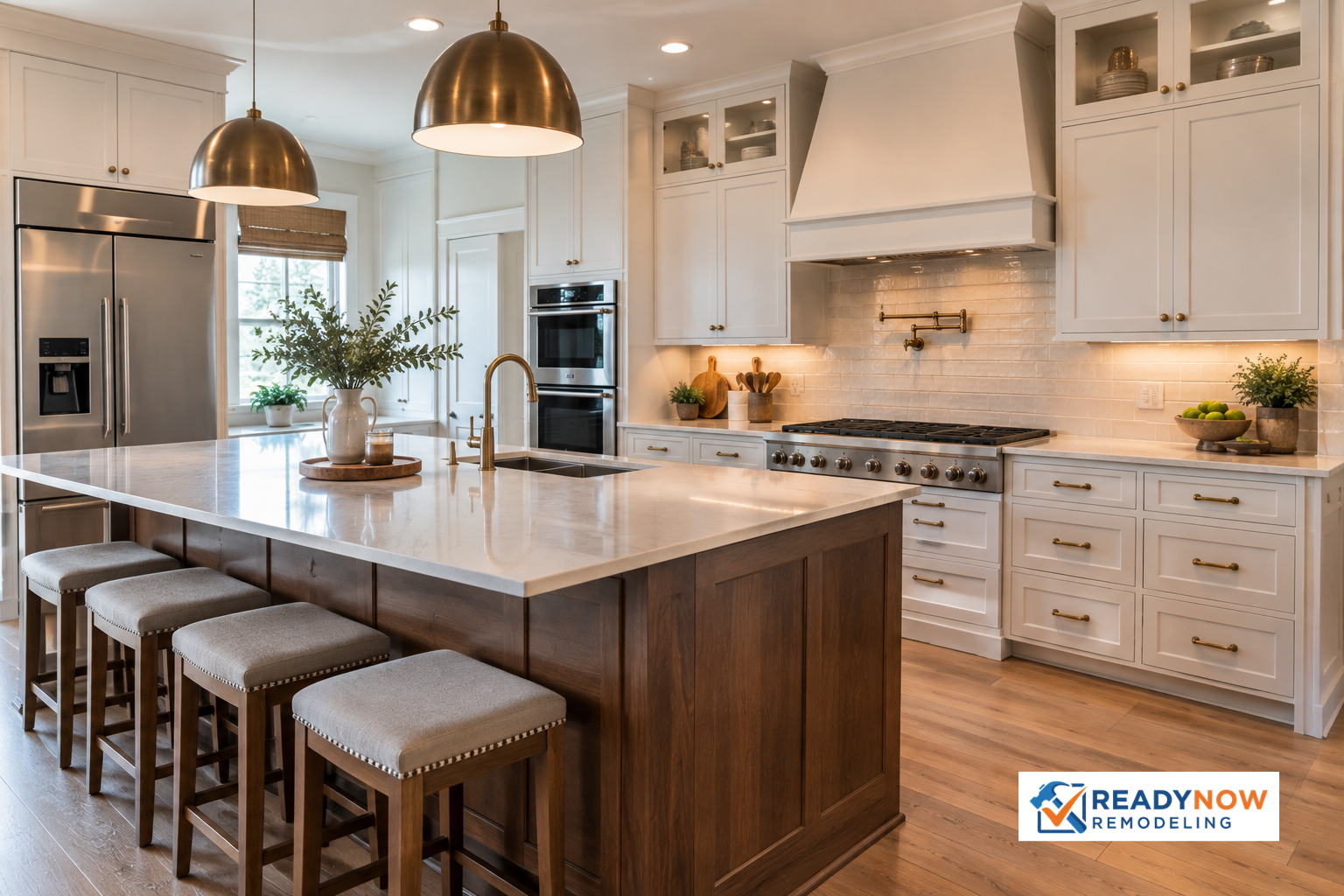
Cabinets take up a big chunk of the kitchen's visual space, so they do most of the heavy lifting when it comes to style. If cabinet doors are bulky, frayed, or just plain broken, the room often feels old right away. Swapping out outdated cabinets for cleaner, simpler styles can dramatically change the room's character. Many homeowners are amazed at how different the space feels with just updated door profiles and finishes.
If the cabinet boxes are still in good shape, refacing can be a smart alternative to full replacement. Refacing keeps the existing structure but updates the doors, drawer fronts, and exterior surfaces. This can save time and reduce demolition while still giving the kitchen a modern look. When paired with new hardware and better organization, the room can feel custom and current without the expense of building everything from scratch.
Storage upgrades make the room feel newer.
Today's kitchens need to do more than just store dishes. They need to hold small appliances, pantry items, cleaning supplies, and cooking tools in a way that feels easy and uncluttered. Pull-out shelves, drawer dividers, trash rollout systems, and corner solutions all contribute to a kitchen that feels thoughtfully designed. That kind of organization is one of the fastest ways to make a space feel less dated.
Homeowners who want professional help often combine cabinetry changes with custom cabinet installation so the storage plan fits the room and household habits. This is especially useful in kitchens originally built with minimal storage or awkward dead space. Better storage does more than improve convenience; it changes how polished and finished the kitchen feels every day.
Upgrade 2: Install New Countertops and Backsplash Materials
Surfaces shape the room’s first impression.
Countertops are one of the first things people notice when they walk into a kitchen. Old laminate with visible seams, stained tile, or heavily patterned stone can make a room feel stuck in the past. Replacing old counters with quartz, stone, or a clean solid-surface material instantly raises the room's perceived quality. The same goes for the backsplash, which can either bring the kitchen together or make it feel visually disjointed.
A good countertop choice should do more than just look good. It should support the way you cook, clean, and live. Families who use the kitchen constantly often prefer durable, low-maintenance surfaces that resist stains and scratches. That practical benefit matters because a kitchen that works well naturally feels more up-to-date than one that only looks modern in photos.
Backsplashes can modernize without overwhelming
The backsplash is a great place to add personality while keeping the overall design timeless. Clean subway tile, large-format tile, soft neutral stone, or a subtle geometric pattern can all bring the space into the present. The key is balance—a backsplash should complement the cabinets and countertops instead of competing with them.
For homeowners comparing materials, professional countertop installation can be paired with tile work for a seamless design that improves both function and appearance. This is especially helpful if your current kitchen has mismatched surfaces or old grout lines that are difficult to maintain. With the right combination, the room can feel brighter, cleaner, and more intentional.
For more guidance on healthy indoor finishes and materials, check out resources from the Environmental Protection Agency on indoor air quality and home materials here. While this might seem technical, it highlights an important point: the materials in your kitchen affect comfort, not just style.
Upgrade 3: Improve Lighting and Electrical Layout
Good lighting makes an older kitchen feel newer instantly.
Lighting is one of the most underrated tools in any kitchen makeover. Even beautiful cabinetry and new counters can look underwhelming if the room is dim or poorly lit. Older kitchens often rely on a single ceiling fixture or a few weak recessed lights, making the space feel flat and dated. Adding task lighting, under-cabinet lighting, and better ambient light can completely change how large and welcoming the room feels.
Modern lighting design also improves safety and usability. Prep areas become easier to work in, shadows are reduced, and the kitchen feels more comfortable during mornings, evenings, and gatherings. In many homes, updated lighting is the fastest way to make the space look like it has been professionally redesigned. It's especially effective when combined with lighter wall colors and reflective surfaces.
Electrical updates support modern appliances and habits.
Many outdated kitchens were built before today's households relied on multiple small appliances, charging stations, and expanded cooking equipment. That often leaves homeowners with too few outlets or awkward appliance placement. Upgrading the electrical layout during a remodel can make the room more flexible and reduce clutter on the counters. A kitchen that functions smoothly almost always feels more current.
Because electrical work affects safety and code compliance, it's important to plan it carefully. The National Fire Protection Association offers helpful information about home electrical safety here. If your kitchen needs a new lighting plan, outlet repositioning, or circuit updates, those improvements can make everyday use safer and more convenient while supporting a cleaner final design.
Upgrade 4: Refresh the Flooring and Trim Details
Flooring connects the entire kitchen to the rest of the home
Kitchen flooring takes a lot of wear, so outdated materials often show age quickly. Worn vinyl, damaged tile, or mixed flooring transitions can make the whole house feel inconsistent. Replacing old flooring with hardwood, luxury vinyl plank, or updated tile gives the kitchen a stronger visual base and helps the room relate better to surrounding spaces. This is especially important in open layouts, where the kitchen floor is highly visible from nearby living areas.
Good flooring also affects maintenance and comfort. Homeowners often prefer materials that are easy to clean, durable enough for spills, and attractive enough to support the rest of the design. A kitchen that feels cohesive from floor to ceiling usually reads as newer, even if the footprint hasn't changed. That visual continuity can be just as important as a major layout change.
Trim and finishes help the kitchen feel complete.
Small details matter more than many homeowners expect. Baseboards, casing, toe kicks, and trim transitions all shape the final impression of the room. If the finishes are chipped, poorly matched, or outdated in profile, the kitchen can feel unfinished even after larger upgrades. Replacing these details creates a more polished result and helps the room feel designed rather than patched together.
For a more complete transformation, some homeowners also consider interior painting alongside flooring and trim improvements. New wall color can make updated materials stand out while softening the look of older features that remain. If the kitchen connects to adjacent rooms, this is often one of the easiest ways to create a more unified main floor.
Upgrade 5: Rework the Layout for Better Flow
Layout changes solve the problems finishes cannot
Sometimes a kitchen feels outdated because the main problem isn't the style; it's the layout. Narrow walkways, poorly placed appliances, blocked sightlines, and cramped work zones can make even a newly finished kitchen feel old. Reworking the layout can dramatically improve the room's usability and visual openness. That's often where the biggest transformation happens.
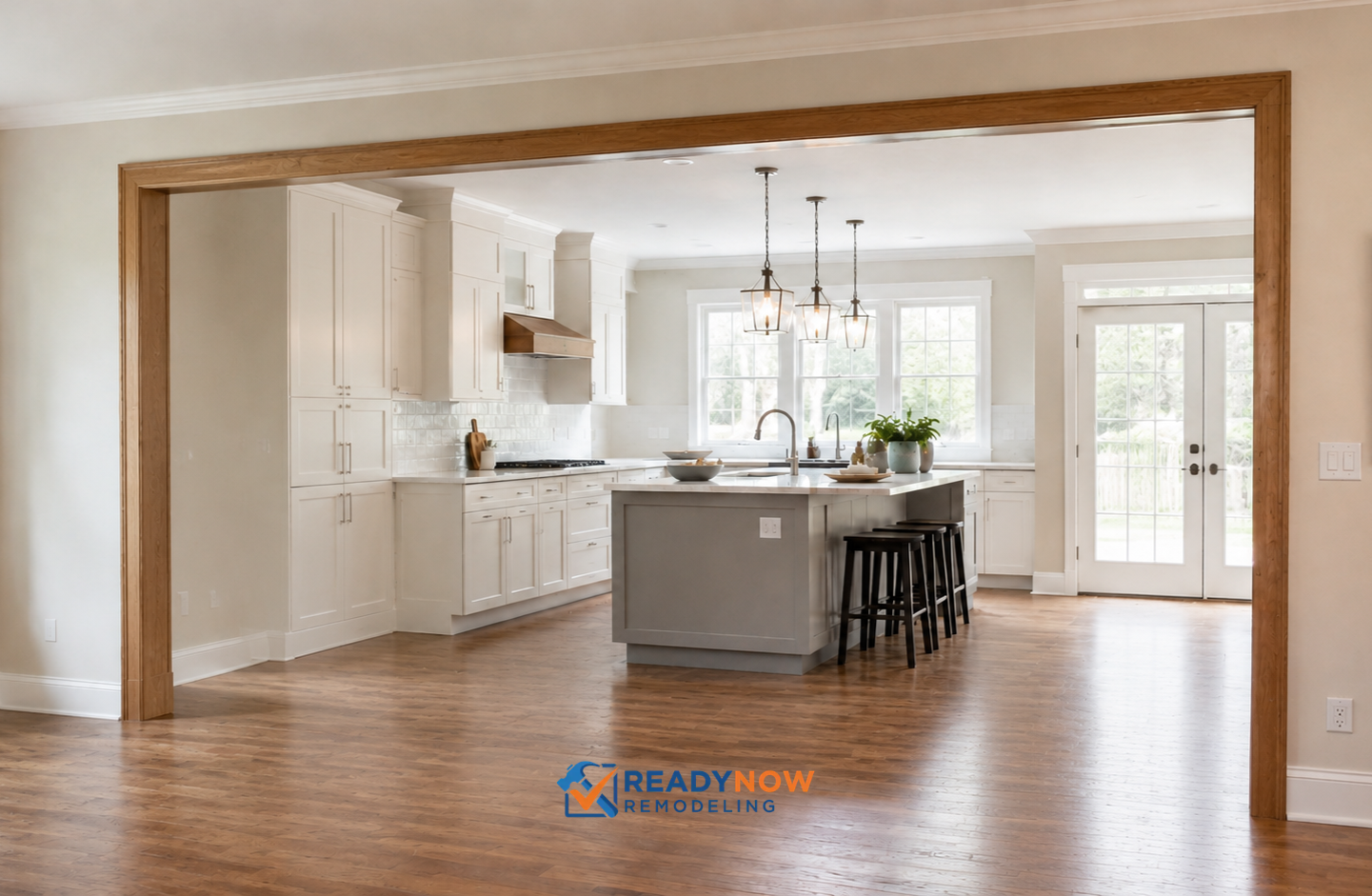
Homeowners are frequently surprised by how much better a kitchen feels when one wall comes down, a peninsula is replaced with a larger island, or storage is reorganized around how the family actually lives. When a space opens up properly, it can feel brighter and more welcoming without adding square footage. If you're considering a bigger change, services like space reconfiguration or open-concept conversions may be worth exploring as part of the planning conversation.
When structural changes are part of the plan
Some layouts require more than cosmetic adjustments. If a wall is load-bearing or the room needs new support framing, the project must be planned with structure, permits, and engineering in mind. That's why professional guidance matters when a kitchen remodel moves beyond finishes. Done correctly, structural updates can make the kitchen feel modern in a way that new paint alone never could.
If the change is significant, homeowners may also need related work such as wall removal or framing changes to create the right opening and maintain safety. The payoff is worth it when the goal is better circulation, more natural light, and a design that supports everyday living. In many homes, these layout improvements become the true turning point between “updated” and “transformed.”
How to Prioritize Your Kitchen Upgrade Budget
Start with the features you see and use most.
If you don't have room in the budget for everything at once, begin with the changes that make the biggest visual and practical difference. In most kitchens, that means cabinets, countertops, lighting, and flooring. These features set the tone for the entire room and influence how finished it feels. A carefully chosen combination of those upgrades can create a strong result without unnecessary spending.
One useful planning method is to separate upgrades into three categories: must-have repairs, high-impact improvements, and bonus features. Must-have repairs include damaged surfaces, safety issues, and worn-out systems. High-impact improvements include the elements that immediately modernize the room, while bonus features can be added later if budget allows. This keeps the project focused and prevents the remodel from becoming scattered or overcomplicated.
Think about return on investment and daily value
A modern kitchen is not just about resale appeal, although that matters too. It is also about how the room supports your habits over the next five to ten years. A well-planned remodel can reduce frustration, improve organization, and make gathering with family more enjoyable. For many households, that daily value is as important as any future listing price.
If you're comparing potential projects, it can help to review national remodeling cost and value trends from a research-based source such as the National Association of Realtors research page. While every house is different, the larger pattern is clear: the right kitchen updates can improve both market appeal and everyday function when they are chosen with care. If your home needs more than a kitchen update, a broader plan such as whole-home remodeling may provide a better long-term fit.
Common Mistakes That Make a Kitchen Feel Dated Again
Mixing too many styles at once
One of the quickest ways to accidentally make a kitchen look outdated is to mix too many competing styles. For instance, ornate cabinet doors, busy granite, trendy lighting, and mismatched hardware can make the design feel cluttered rather than modern. A better strategy is to choose one clear direction and repeat that design language throughout the space. Consistency creates calm, and calm often reads as timeless.
Another common mistake is focusing only on what is visible at eye level. If the flooring, trim, outlets, and layout are still old, the room will still feel dated even with one or two attractive upgrades. A successful renovation considers the whole space, not just the most obvious materials. That's why detailed planning matters before any work begins.
Ignoring how the kitchen connects to the rest of the house
A kitchen doesn't exist in isolation. If the nearby dining room, living room, or entryway still shows heavy wear, the overall impression of the home may remain inconsistent. This is especially true in open layouts where adjacent finishes are visible from multiple angles. To avoid that issue, many homeowners combine kitchen updates with related interior renovation work so the transition between rooms feels natural.
Lighting temperature, flooring transitions, and paint choices all matter when creating a cohesive home. If the kitchen is bright and modern but the rest of the main floor feels disconnected, the remodel may not achieve its full potential. The goal is to make the kitchen feel like part of a refreshed home, not an isolated upgrade.
When to Consider a Full Remodel Instead of a Partial Update
Some kitchens need more than surface changes.
There are times when upgrades to cabinets or counters will help, but they will not fully solve the problem. If the kitchen has major layout flaws, water damage, outdated systems, or a poor connection to surrounding rooms, a more complete remodel may be the better investment. In those cases, patching the space piece by piece can actually cost more over time. A full remodel creates a cleaner result and often saves the homeowner from repeating the same project later.
Projects with multiple issues can also benefit from broader planning through whole-home remodeling, especially when kitchens, bathrooms, and common areas all need attention. That approach helps unify the design and improve the way the entire home functions. For older homes, it can also uncover hidden opportunities that a cosmetic update would never address.
A simple rule for deciding
If your kitchen feels outdated mainly because of finishes, a targeted upgrade plan may be enough. If it feels outdated because of layout, storage, workflow, and aging systems, you may need a more substantial remodel. The more problems you are trying to solve, the more value you may get from a comprehensive plan. A remodeling professional can help you decide whether the best answer is a focused refresh or a larger transformation.
That's where thoughtful planning and honest communication make a difference. The right team can help you separate what truly needs replacement from what can be improved, preserved, or phased in later. A kitchen remodel should make your home easier to live in, not more stressful to manage.
Conclusion: A Modern Kitchen Changes How Your Whole Home Feels
If your kitchen feels outdated, you don't have to settle for living with it. Strategic upgrades to cabinets, countertops, lighting, flooring, and layout can completely change how the space looks and works. More importantly, those improvements can make the entire home feel brighter, more comfortable, and better aligned with the way you live. The best transformations are not always the largest ones; they are the ones that solve real problems while creating a cleaner, more current design.
If you're ready to explore your options, start by identifying the features that bother you most and the changes that will create the biggest impact. From there, you can decide whether a focused update or a broader remodel is the better fit. For homeowners who want expert support, ReadyNow Remodeling helps Dallas-area homeowners plan kitchen updates that improve style, function, and long-term value. Learn more about our kitchen remodeling services, and if your home needs a larger transformation, ask about whole-home remodeling or interior renovations to create a more cohesive result.
Ready to make your kitchen feel new again? Contact ReadyNow Remodeling today to discuss your goals, review your options, and start planning a space that finally feels as modern as the rest of your life.